
- About Us
-
Our Business
-
- Therapeutic Areas Our portfolio is diverse and based upon - Market Research, Regulatory & IP.
- Licensing Licensing activities are excellent opportunities for companies to expand their portfolio.
- Biosimilar Biosimilar are biologic medicines that are developed to match their reference medicine.
-
- CRAM India has grown to be one of the key nations complying GMP manufacturing norms.
- Medical Devices REVA help our clients to deliver customized, cost-effective medical device value chain.
-
API

-
Dosage form

-
-
Operations
- At Reva, we have requisite infrastructure, with a balanced reach across Regulated, Emerging & Expansion markets. And we are committed to helping create healthier communities worldwide through education, outreach and better access to treatment.
-
Research & Development

-
Manufacturing

-
Quality

- Media
- Contact us


Pharmacy closures in England threaten plan to use them instead of GPs for some care | 07 October, 2024
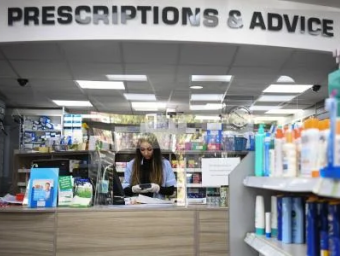
High street pharmacies are closing at such an alarming rate that it threatens the drive to use them instead of GPs to care for millions of people, the NHS’s patient champion warns today.
A total of 436 community pharmacies in England shut permanently last year and there were also 13,863 temporary closures, which stopped patients from obtaining health advice and medication.
What appears to be a growing trend of permanent closures is hitting rural areas, those with larger numbers of older people and deprived communities hardest, according to Healthwatch England.
Its findings, which were based on figures supplied by NHS bodies, prompted fears that closures are leaving some parts of England as “pharmacy deserts” where patients struggle to access care.
The watchdog received responses to freedom of information requests it submitted from all but one of the 42 NHS integrated care boards (ICBs), regional bodies that commission and pay for NHS services.
They showed that 436 pharmacies closed down between 1 January and 31 December 2023 – an average of more than one a day. In addition, pharmacies also closed temporarily 13,863 times, for a total of 46,823 hours and for an average of almost 18 hours at a time in some places, the data from ICBs showed.
“Staff shortages, the key driver of permanent and temporary closures, call into doubt the potential of Pharmacy First, meaning people can’t get the advice, care and medications they need and when they need them”, said Louise Ansari, Healthwatch’s chief executive.
Pharmacy First is the government’s drive to reduce the strain on overworked GPs through pharmacists treating what it hopes will be millions of patients a year for seven minor ailments such as a sore throat, earache, infected insect bite or sinusitis.
“It’s clear that rising levels of closures are risking leaving some areas of the country as pharmacy deserts, with people having to travel much further to get access to vital services”, said Paul Rees, the chief executive of the National Pharmacy Association.
“Community pharmacies act as the front door to the NHS. If people lose access to them it will force more patients into the eight o’clock scramble at their GP surgery, putting pressure on the rest of our NHS system.”
Responses from ICBs show that staff shortages, including the difficulty in finding locum pharmacists, lie behind many of the temporary closures, Healthwatch added.
Temporary closures “are adding to the deepening crisis in the sector”. It also acknowledged longstanding complaints from pharmacy organisations that lack of government funding is hampering their activities by asking ministers to “evaluate” the money the sector receives.
Healthwatch’s findings showed that:
- Cheshire and Merseyside ICB saw the most permanent closures last year – 51
- The North East and North Cumbria ICB had the highest number of temporary closures – 1,438
- The same area also saw the highest number of hours lost to temporary closures – 4,054
- And pharmacies in the Norfolk and Waveney ICB area shut temporarily for the longest number of hours on average – 17.48
“This government inherited a broken NHS where pharmacies have been neglected for years”, a spokesperson said.
“Pharmacies are key to making healthcare fit for the future as we shift the focus of the NHS out of hospitals and into the community. “We will make better use of their skills by increasing the number of pharmacists able to prescribe medication themselves and launch a review of community pharmacy funding.”
(Source: The Guardian)